
In HSE (Health, Safety & Environment) departments, various methods exist to identify impairments that may pose a risk in critical operations. Each provides different types of information and presents distinct characteristics in terms of required time and perceived invasiveness.
In large-scale industry, time is critical — operations can’t be delayed for lengthy checks. Also, solutions must be accepted by workers; tools requiring 24/7 wear or constant video monitoring often meet resistance.
1. Psychomotor Vigilance Test (PVT)
-
What it measures: reaction time to visual stimuli.
-
Test duration: validated version lasts 10 minutes (used by NASA in fatigue research). Shorter versions exist but lack scientific validation.
-
Invasiveness: low; it only requires brief interaction, though it demands active collaboration.
-
Typical use case: research, sleep studies.
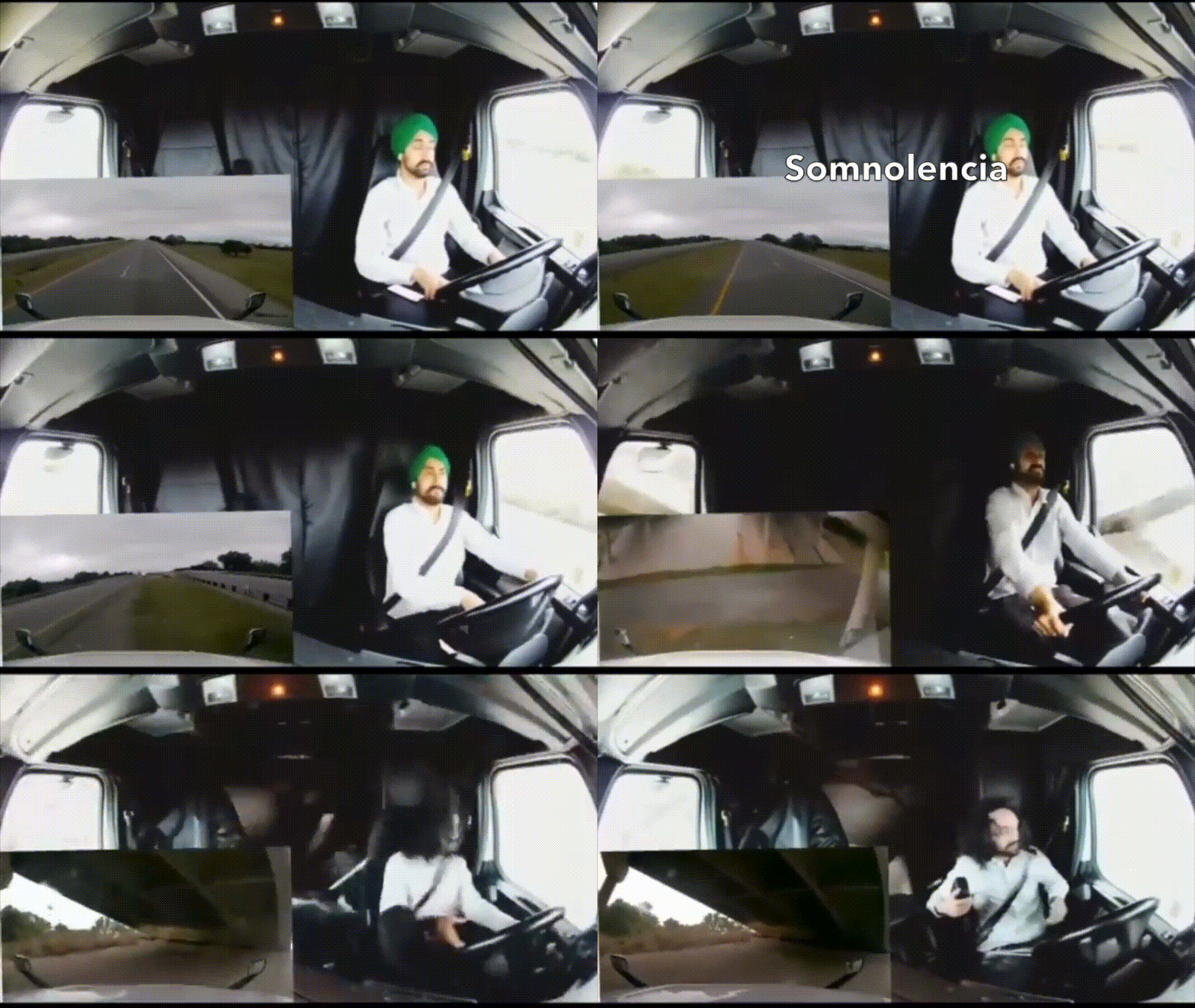
2. Monitoring Cameras
-
What they measure: blink rate, posture, or drowsiness via computer vision.
-
Test duration: continuous monitoring in real-time.
-
Invasiveness: high; workers are recorded during work, leading to concerns about privacy and rejection.
-
Typical use case: transport, mining.
3. Wearable Devices
-
What they measure: heart rate, movement, sleep quality.
-
Test duration: requires continuous usage (24/7).
-
Invasiveness: high; devices are worn even off-hours, often perceived as intrusive.
-
Typical use case: wellness programs, habit tracking.
4. Optovera
-
What it measures: the Pupillary Light Reflex (PLR) — an involuntary response from the autonomic nervous system.
-
Test duration: 1 minute. Fits industrial requirements with minimal disruption.
-
Invasiveness: very low. No sensors or continuous monitoring. Quick, point-in-time, and non-invasive.
-
Typical use case: pre-shift checks or before critical tasks in mining, energy, transport, and construction.
Comparative Table
| Method | Test Duration | Perceived Invasiveness | Main Metric Measured | Common Use Context |
|---|---|---|---|---|
| PVT | 10 min (validated) | Low (point-in-time test) | Psychomotor reaction time | Research, fatigue studies |
| Cameras | Continuous | High (constant recording) | Visible external signs of fatigue | Transport, mining |
| Wearables | Continuous (24/7) | High (perceived surveillance) | Indirect physiological variables | Wellness, rest habits |
| Optovera | 1 min (quick test) | Very low (no continuous use) | Pupillary reflex, autonomic system | Critical operations, HSE |
Conclusion
Each method provides different insights:
-
PVT is valuable in labs, but its length makes daily use impractical.
-
Cameras and wearables offer continuous monitoring but are often seen as invasive.
-
Optovera provides fast, objective, non-invasive screening of the autonomic nervous system — ideal for high-risk operations where time and worker acceptance are critical.