
The Pupillary Light Reflex (PLR) is an involuntary eye reaction controlled by the autonomic nervous system. When the pupil contracts or dilates in response to light, it reflects the state of the neurological pathways regulating attention, alertness, and responsiveness.
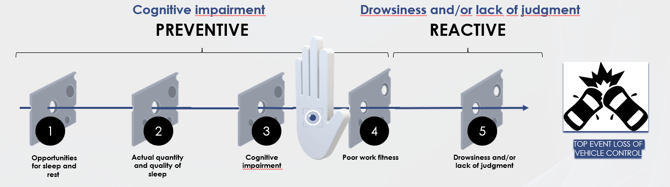
For HSE departments, this makes the PLR a highly valuable tool for detecting cognitive and functional impairments that may go unnoticed with other methods.
PLR and its link to cognitive impairment
-
The neural circuit that controls the PLR involves the brainstem, cerebral cortex, and parasympathetic and sympathetic nerves.
-
Any disruption in these circuits — due to fatigue, alcohol, drugs, medications, neurological diseases, or stress — results in an altered pupil response.
-
The PLR is affected in parameters such as latency, amplitude, and contraction speed — all of which can be objectively measured.
In short, when the nervous system is impaired, the eye shows it instantly.
Relevance for HSE challenges
In industrial safety management, HSE teams face three main challenges:
-
Real-time risk detection
-
Traditional methods (like questionnaires or cameras) may not show physiological states.
-
PLR provides an immediate signal of the worker’s cognitive condition before a critical task.
-
-
Going beyond just fatigue
-
Most current solutions focus only on sleep or drowsiness.
-
PLR reflects impairments from any factor affecting the nervous system.
-
-
Objective and tamper-proof measurements
-
The worker cannot manipulate the PLR result, as it is an involuntary reflex.
-
This ensures HSE teams have trustworthy data to assess readiness.
-
Conclusion
PLR is a reliable indicator of cognitive impairment because it translates the status of the autonomic nervous system into measurable physiological data. For HSE, this means better risk management — not just detecting fatigue, but any condition that compromises safety in critical operations.